
17 August 2026Autodate SmartFleet
How Technology Reduces Operational Waste in Fleet Management
Operational waste is not always obvious. Here's how fleet management technology turns real-time data into smarter decisions, less idle time, better routes, and more efficient operations.
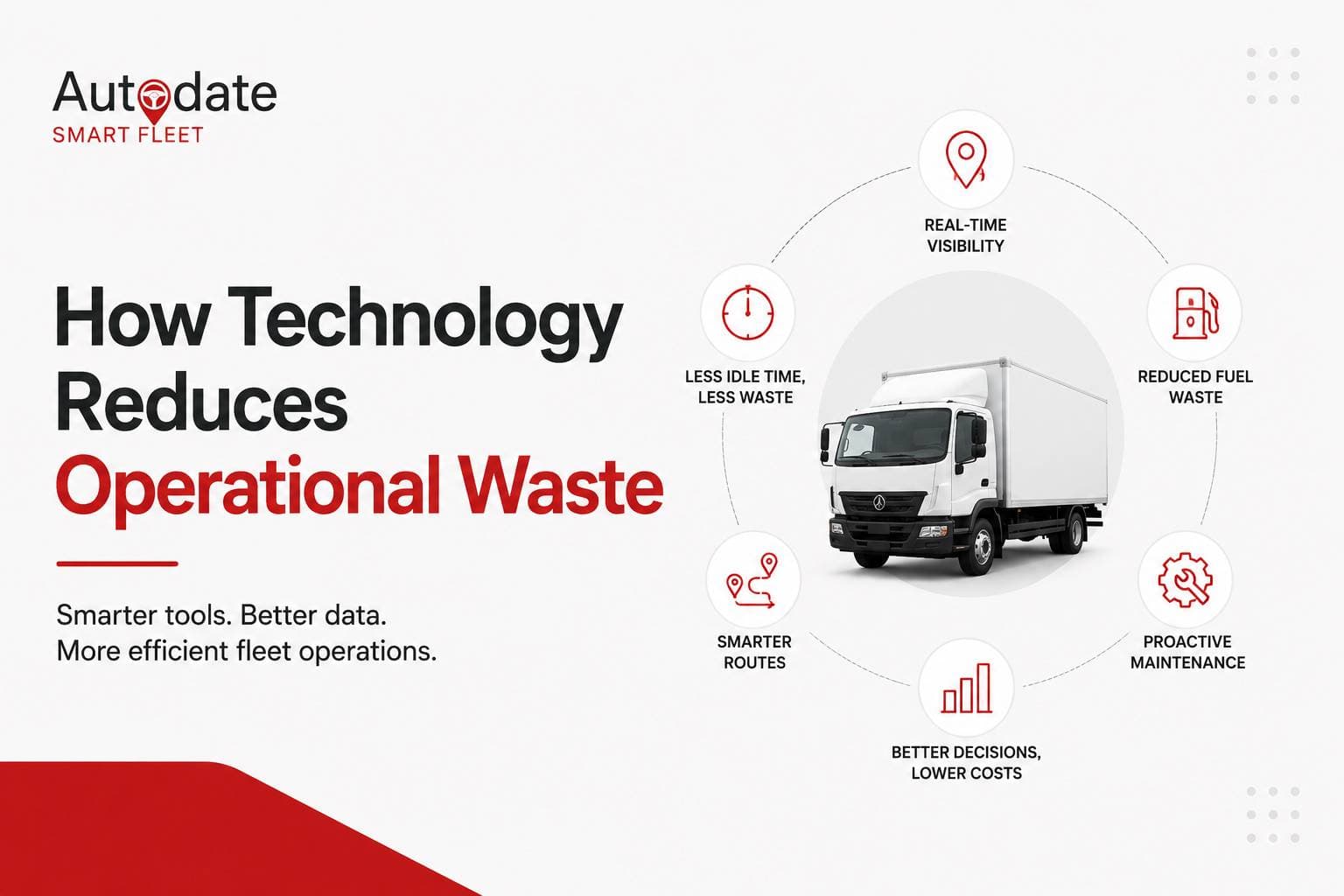
Operational waste is not always obvious. In fleet management, it can come from vehicles sitting idle, inefficient routes, unnecessary fuel consumption, delayed maintenance, underutilized vehicles, or time lost to poor planning.
For businesses managing multiple vehicles, these small inefficiencies can quickly become significant operational costs. This is where fleet management technology can make a measurable difference.
Turning Fleet Data into Better Decisions
Modern fleet management systems provide businesses with real-time visibility into how their vehicles are being used. Through telematics, GPS tracking, vehicle monitoring, and data analytics, fleet managers can identify patterns that may otherwise go unnoticed.
For example, tracking vehicle activity can reveal excessive idle time, inefficient routes, unauthorized vehicle use, or vehicles that are spending too much time off the road.
Instead of relying on assumptions, managers can use this information to make data-driven fleet decisions.
Reducing Idle Time and Fuel Waste
One of the simplest ways technology can improve fleet efficiency is by identifying unnecessary idling.
When vehicles remain stationary with engines running, businesses can consume fuel without generating productive mileage. Over time, this contributes to higher operating costs and unnecessary resource consumption.
Fleet technology can help monitor idle time and highlight recurring patterns, allowing managers to address the behaviour and improve fuel efficiency.
Smarter Routes, Less Waste
Route planning is another area where technology can reduce operational waste. Route optimization tools can help fleet managers identify more efficient journeys, avoid unnecessary mileage, and improve vehicle utilization.
Better routing can mean less time on the road, more productive trips, and fewer resources spent completing the same task.
This supports not only financial efficiency but also sustainable fleet operations.
Preventing Waste Through Proactive Maintenance
Vehicle downtime can also create significant operational waste. Unexpected breakdowns can disrupt schedules, increase repair costs, and reduce fleet availability.
With predictive maintenance and vehicle performance monitoring, fleet managers can identify potential maintenance issues earlier. Addressing problems before they become major failures can extend vehicle lifespan and improve fleet reliability.
Technology as an ESG Enabler
Reducing operational waste is more than a cost-saving strategy. It can also contribute to broader ESG goals.
A more efficiently managed fleet can reduce unnecessary fuel consumption, improve resource utilization, strengthen operational controls, and support safer, more accountable fleet operations.
The goal is not simply to operate more vehicles, it is to operate them smarter.
Conclusion
Technology gives fleet managers the visibility needed to identify waste, understand its causes, and take action. From fleet tracking and route optimization to fuel monitoring and predictive maintenance, the right tools can transform everyday fleet data into better operational decisions.
Less waste. Better efficiency. Smarter fleet operations.